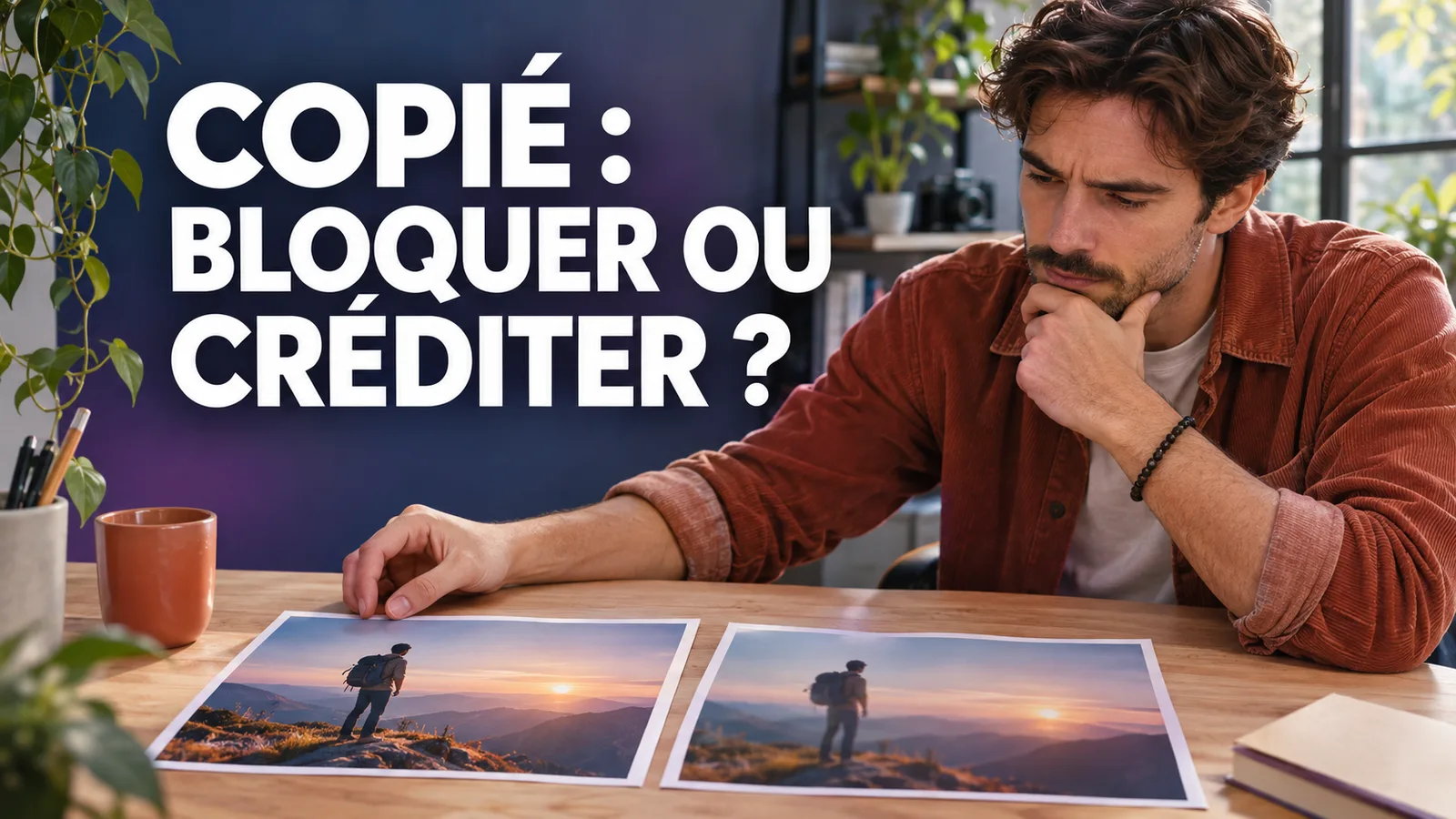
Instagram extends Content Protection to eligible creators to locate visual copies of their videos on Instagram and Facebook. Once registered, they can monitor a match, hide it, add a credit link or release the claim. The right strategy is therefore not to block systematically: we must choose the action that protects both the work, the reputation and the commercial objective.
The official announcement was published on 17 November 2026. At 19 November 2026, the deployment concerns accounts deemed eligible according to the criteria of originality and integrity ofInstagram. The platform did not provide a list of countries. A second ability, intended to recognize replays of the lyrics of a video when the image has been replaced by the AI, is only announced in a test with a small group in the coming weeks.
What Instagram has officially announced
Content Protection is not a new automatic copyright. It is a tool for detecting and managing correspondence. After the registration of an eligible creator, Instagram automatically protects the original videos published afterwards. Some older videos can also be added manually. The system then searches for complete or partial visual correspondence on Instagram and Facebook.
When a correspondence is found, the creator receives an alert and can consult useful information, including the number of views of the copy and the audience of the account which published it. This logic is based on the correspondence technology of Rights Manager, already used by Meta to help rights holders find their content.
The important novelty lies with the target audience: the tool, first launched for Facebook creators, now reaches eligible Instagram creators. They must receive a notification in their course of activity or find access in the section on professional tools. Instagram also states that an access request may be filed by accounts that believe that they meet the conditions without having yet received the invitation.
The status must be formulated precisely. Protection against visual correspondence is officially announced and is being deployed to eligible Instagram creators. It is not guaranteed for all accounts in all countries or on an identical date. On the other hand, the detection of videos that reuse the lyrics of a creator with new visuals generated by IA is still a future test, initially limited to a small group.
How Video Detection Copied Works
The tool compares the visual footprint of a protected video with the content published on Meta's two major platforms. A "correlation" does not necessarily mean that the entire Reel has been duplicated: an extract or a sufficiently close part can be reported. The creator then keeps the final decision on the action proposed in the interface.
This difference between detection and decision is essential. An automated system can identify a similarity, but it does not always know the context: a partner may have received an authorization, a client may share an agreed testimony, a media may cite a short excerpt, or an account may divert a video to sell a misleading offer. Instagram therefore provides for an authorization list, sometimes called a whitelist, for profiles that have the right to use the content: secondary account, collaborator, brand or distributor.
The creator must also keep his own evidence. The rushes, the source file, the date of publication, the partnership contract and the authorization exchanges remain valuable if the property is contested. If another account protects the video first, Instagram indicates that a property challenge mechanism is available; An alert for intellectual property infringement is also possible.
This protection complements the originality logic already put forward by Meta. The group distinguishes the content actually produced or substantially transformed from simple online updates and minor changes. To understand this dimension of visibility, the VIFLY analysis on the scope of original content and restets on Instagram provides a complementary framework: the algorithmic recommendation and rights management are linked, but these are not the same subject.
Follow, hide, credit or release: what decision?
Content Protection offers four answers. The tracking leaves the copy visible and allows to observe its performance; This is the default option. The masking makes the correspondence inaccessible on Instagram and Facebook, without this action directly imposing a sanction against the profile which has been published. The credit link adds a reference to the original or creator's profile on eligible Instagram matches. Finally, the release abandons the claim and leaves the publication online.
The right choice depends less on immediate agitation than the real risk. Before taking action, ask four questions: Does the copy create confusion about the author? Does it hijack traffic or sales? Does it affect your reputation? Can his audience, on the contrary, bring you a useful discovery if the credit becomes clear?
Example 1: a coach copied by a thematic account
A coach publishes an original video explaining a method of mental preparation. A thematic account reproduces the extract without changing its words, obtains 80 000 views and sells nothing on its behalf. If the tone is true and the audience is relevant, adding a credit link may be more interesting than masking the copy immediately. The coach recovers a visible attribution, then directs new visitors to a clear page containing his diagnosis, newsletter and sessions. One VIFLY LinkHub can then ensure continuity between discovery, proof and contact.
Example 2: a trainer whose video is used to sell a false offer
A trainer discovers that her lesson excerpt is reused in an organic advertisement leading to a training she has never validated. Risk is no longer just loss of scope: the public may believe that it recommends the product. Masking becomes a priority, accompanied by dated catches, the preservation of the link and, if necessary, an intellectual property report. If recognizable persons appear in the video, copyright does not replace consent; the VIFLY guide on the right to image on Instagram helps to distinguish these obligations.
Example 3: an artist authorizes a partner brand
An illustrator signed a collaboration in which the brand can republish three videos for six months. The trade mark account must be added to the authorisation list before or from the first correspondence. The contract should specify the accounts concerned, the duration, territories, permitted modifications, advertising use and credit. At the end of the agreement, the artist withdraws the authorization and re-evaluates the publications still active. Here, releasing correspondence without documenting the framework would be less secure than using the authorization list and keeping the contract.
The viewpoint VIFLY : protecting is not necessarily closing
The value of a content is not limited to the exclusivity of its file. A video can generate visibility, understanding, trust, and then commercial action. Credited recovery can strengthen this chain; A deceptive copy can break it. The most mature strategy is therefore to protect the path to the author, not just to remove duplicates.
This is why default tracking can be useful for a short time. It measures dissemination, identifies accounts that regularly amplify content and decides whether an editorial or commercial relationship should be formalized. Conversely, waiting for a copy to usurp an identity, distort a message or hijack a sale increases the risk. The decision must be quick when the harm is clear, and measured when attribution can turn a recovery into an opportunity.
This approach assumes that the original profile is ready to convert attention. An understandable bio, evidence of expertise, an identifiable offer and a single point of contact avoid winning visits without creating opportunities. The VIFLY creator guides can be used to structure this route beyond technical protection alone.
Nuances, limitations and points to watch
First limit: the tool is not yet universal. Eligibility depends primarily on Instagram's standards of originality and integrity, and deployment may vary according to accounts. The absence of the button therefore does not prove that your content is considered non-original. At 19 November 2026, Instagram did not provide a detailed global calendar or official list of countries served.
Second limit: technical correspondence is not a legal decision. The right of citation, parody, license, collaboration or third party rights may change the analysis. Content Protection does not replace a contract or legal advice. Avoid claiming a video if you do not have the necessary rights, especially when it incorporates music, licensed images or a performance performed for a client.
Third limit: the credit link is only announced for certain eligible Instagram connections. It should not be promised that it will appear on each copy or platform. Similarly, masking correspondence reduces its broadcast on Instagram and Facebook, but does not guarantee its disappearance from other networks, websites or local backups.
Fourth limit: AI-related detection should not be presented as an already generalized protection. Instagram plans to test, within weeks of the announcement, the identification of videos that capture the original lyrics while replacing images with IA-generated visuals. A small group of creators will initially be involved. Actual efficiency, supported languages and the extension schedule are not yet publicly documented.
Finally, protection does not address all the issues of reputation. A copy can be removed after it has already been circulated, and an assignment can attract visitors to a poorly prepared profile. The answer must therefore combine platform tool, rights documentation, regular monitoring and consistent conversion path.
What to do now? An eight-step action plan
- Check your access. See activity notifications and the section of professional tools in the Instagram app. If access is offered, read the conditions before registering.
- Identify your strategic videos. Start with content that carries a method, a demonstration, a work, a testimony or an easily detourable offer. Manually add the old eligible videos when the option exists.
- Archive creative evidence. Keep source files, rushes, scripts, exports, dates, invoices and contracts in a dated folder. A capture of the publication is not always enough to trace the creation.
- Prepare your authorization list. Identify sub-accounts, clients, partners, media and authorized brands. Check that the authorisation specifies the duration and uses.
- Define a decision rule. For example: follow a neutral recovery for 72 hours, credit a relevant take-back, immediately hide a commercial usurpation and release an authorized match.
- Document each sensitive case. Before a masking or reporting, note the URL, account, date, views, catches and damage observed. This chronology helps in the event of a dispute.
- Prepare the destination of the credit. Optimize the bio and connect your content to a page that explains who you are, what you propose and how to contact yourself. The home page of VIFLY presents the tools designed to turn this visibility into a useful relationship.
- Review each month. Check connections, withdraw expired authorizations and adjust your policy according to the results: traffic, qualified subscriptions, requests, sales and risks avoided.
The priority is not to get a perfectly empty matchboard. It is to maintain control over how your work is circulating, the identity associated with it, and the path proposed to people who discover it.
FAQs about Instagram Content Protection
Is Content Protection available for all Instagram creators?
No. Instagram talks about a deployment to eligible creators, mainly according to its standards of originality and integrity. The accounts concerned receive notification or see the tool in their professional functions. No complete global calendar was published in 19 November 2026.
Does the tool automatically delete copies?
No. It detects correspondence and lets the creator choose between tracking, masking, adding credit when available, or releasing the claim. Tracking is the default option.
Does a hidden copy automatically penalize the other account?
Instagram indicates that the masking makes correspondence invisible on Instagram and Facebook and thus reduces its broadcast, without directly imposing a disciplinary sanction against the other profile.
Does Content Protection also protect videos modified by AI?
Not generally at this stage. Instagram announces a limited test for videos that capture the lyrics of original content while replacing the visuals with the AI. This test should start with a small group within weeks of the announcement.
Should we block all unauthorized recaptures?
No. A faithful and credited resumption can bring a relevant hearing, while a misleading or commercial copy can justify a quick masking. The decision must take into account the confusion, prejudice, attribution and purpose of the creator.
Does protection replace a contract or evidence?
No. The tool facilitates detection and action on Meta platforms, but it does not replace retention of source files, written authorizations, licensing contracts or, for a complex situation, legal advice.
Sources
- Instagram for Creators — Introduction Content Protection, 17 November 2026.
- Meta — Rewarding Original Creators on Facebook, 12 March 2026.
- Meta — Content Protection: Tu nuevo guardián creativo en Facebook, 17 November 2025.