Be found · Practical guide
Link building: useful backlinks and a lasting strategy.
Build a link strategy around useful resources: audit your links, select relevant publishers, prepare outreach and measure outcomes.
VIFLY editorial team · Updated on
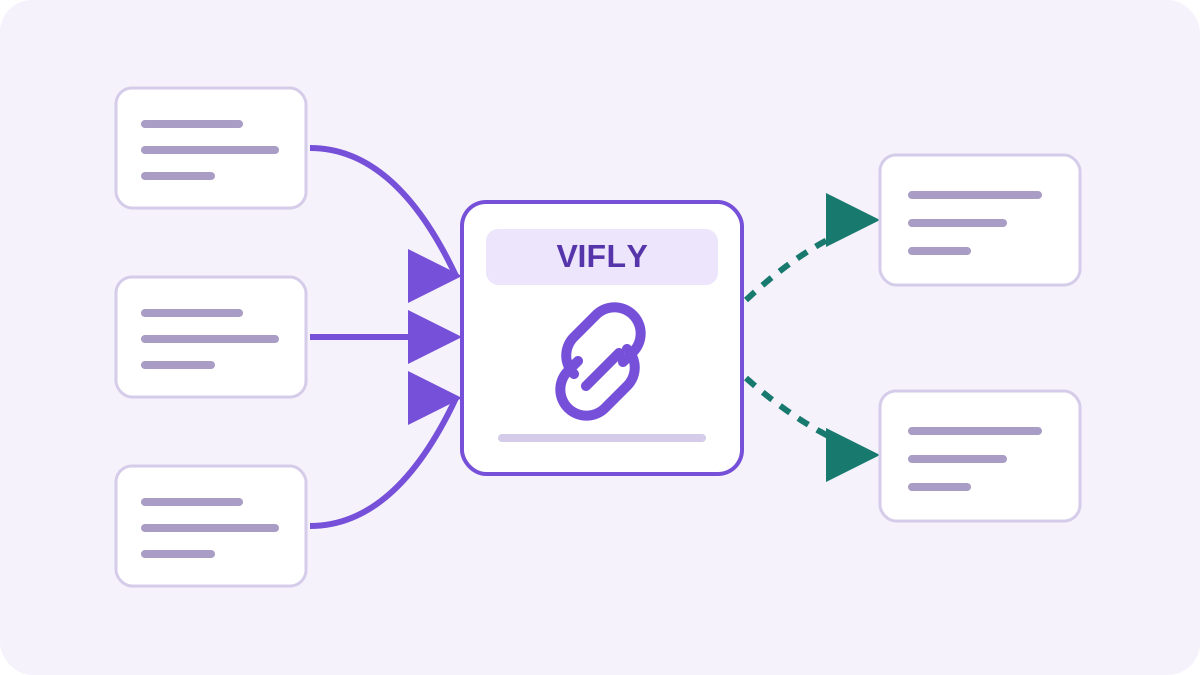
From a backlink to the reader’s next step
A relevant source
A website addresses a real problem for your audience.
A specific resource
The link leads to the page that delivers the promised answer.
A coherent journey
An internal link offers a useful next step: a guide, product or appointment.
Separate measurements
Track visits, actions and visibility without confusing their causes.
Step 1
1. Link building, backlinks and referring domains: the basics
A backlink is an incoming link from another web page. A referring domain is the website hosting it: ten links from one domain do not equal ten different domains. Link building develops and maintains those recommendations. It complements content and technical SEO rather than replacing them.
Google describes link analysis, including PageRank, among its ranking systems. It publishes no formula converting a link count into a ranking. Separate three possible benefits: helping people discover a resource, receiving interested visitors and contributing to search engines’ understanding of your pages. Each needs a different measurement.
Check the reference material: Google: ranking systems and link analysis
Step 2
2. Choose a page and an objective before seeking links
First write: “This page helps this audience make this decision.” A product page fits a tool shortlist; a detailed method may fit a professional reading list. Do not automatically send every link to your homepage. The destination should fulfil the referring text’s promise without making the visitor hunt for the answer.
Choose an observable action: reading a related guide, downloading a useful resource or requesting an appointment. On VIFLY, LinkHub can organize destinations, while the digital products guide helps prepare the offer. These tools organize the journey; they do not automatically generate backlinks or citations. Check the public page and its actual capabilities before recommending it.
Step 3
3. Audit your backlinks with Search Console
Start with your own website. In Search Console, export the pages and domains shown in the Links report, then inspect a sample of source pages. The report is partial, groups some information and is not a real-time inventory. A reported link may have changed or disappeared; absence from the export does not prove that a link does not exist.
Separate observation from interpretation in your tracker. Record the source URL, destination, context, review date and next action. Look for an old broken destination, a mention that could usefully include a link or an important page nobody recommends. A third-party tool can expand discovery; its score remains a proprietary indicator, not an official Google measurement.
Check the reference material: Search Console: Links report
Step 4
4. Recognize a useful backlink
Evaluate a specific publication, not just its domain name. Read the article, identify its audience and consider whether the destination provides information the reader needs. The link should make sense within its paragraph. A small specialist website can be relevant; a high authority score never replaces that review.
Use the six questions below as a VIFLY editorial decision checklist. They are not official ranking criteria or a scientific score. If you cannot explain the link’s value to an outside reader, improve the resource or drop the prospect. Save your reasoning so you can review the decision later.
| Question | What to record |
|---|---|
| Is the subject relevant? | The specific article and the need it addresses. |
| Does the audience fit? | The reader who would benefit from the resource. |
| Does the page add something? | The information missing from the source passage. |
| Is the decision editorial? | The publisher’s actual freedom to decide. |
| Is the relationship transparent? | Any benefit exchanged and link qualification. |
| Will the destination remain useful? | Correct URL, accessible content and a maintenance owner. |
Step 5
5. Six link building approaches to adapt to your activity
Find places where your resource complements something already useful: an association guide, a specialist article, a resource collection or a professional contribution. Prepare a few proposals and read every publication. Start with a gap you can genuinely fill, not a directory of contacts to message in bulk.
A collaboration can produce a useful shared resource when each participant contributes identifiable expertise. An interview needs useful answers; a case study needs clear limitations. If free access, payment or another benefit is exchanged for publication, treat the relationship as commercial and qualify the link accordingly. Never require a link in return for a simple testimonial.
| Approach | Evidence of usefulness |
|---|---|
| Original resource | A template with instructions and a completed example. |
| Existing mention | A passage where a link would help verify the statement. |
| Relevant broken link | An equivalent resource without a misleading commercial detour. |
| Expert contribution | A documented answer attributed to a real person. |
| Professional partner | Shared documentation useful to both audiences. |
| Specialist community | A complete answer before any link suggestion. |
Check the reference material: Google: qualifying outbound links
Step 6
6. Create a resource people have a reason to cite
Turn your expertise into something verifiable: an annotated template, small calculator, comparison method, specialist glossary or documented project account. A long generic list rewritten from other articles offers little reason to cite you. Publish the method, assumptions and review date; clearly identify anything based on a fictional example.
For a digital product, show a sample page and usage instructions before purchase. For appointment-based work, a preparation worksheet can help readers before their session. VIFLY can then serve as a destination for presenting the offer. Keep the recommended resource available without signup when that helps people use and verify it.
Check the reference material: Google: creating helpful, reliable content
Step 7
7. Contact a publisher with a specific proposal
Contact the person responsible for a genuinely relevant publication. Identify the passage you read, explain your contribution and provide a direct destination. Leave the decision to the editor without demanding an anchor, deadline or followed link. The templates below are drafts to adapt; sending identical copies to an entire list defeats their purpose.
If the message is commercial prospecting, apply the rules appropriate to the recipient and context. CNIL distinguishes professional situations from consumers; a publicly listed address is not universal permission to market to someone. Identify the sender, minimize collected data and respect objections. A refusal closes the prospect.
Templates to adapt: replace the bracketed fields, check the contact is relevant and respect any refusal. This page sends no messages.
Check the reference material: CNIL: commercial email prospecting
Step 8
8. Anchors, dofollow, nofollow, sponsored and ugc
The anchor is a link’s clickable text. It should describe its destination naturally within the sentence: a resource name, brand or useful description. Avoid demanding the same commercial phrase everywhere. “Dofollow” is an informal term: an ordinary link needs no special rel attribute. Also check that it is a real HTML link with a usable destination.
The table distinguishes common relationships. For each proposal, keep a record of what was requested, promised or exchanged. This helps the publisher choose an appropriate qualification and prevents a commercial placement from appearing to be an independent recommendation. A reader can find a nofollow link useful: assess the service provided as well as your SEO hypothesis.
| Relationship | Qualification |
|---|---|
| Ordinary editorial link | No “dofollow” value required. |
| Paid placement | rel="sponsored"; Google also accepts nofollow. |
| User contribution | rel="ugc" for user-generated content. |
| Other destination you do not endorse | rel="nofollow" as appropriate. |
Check the reference material: Google: crawlable links and anchor textGoogle: qualifying outbound links
Step 9
9. Connect backlinks with internal links
After clicking, the visitor should know where to go. Add internal links where a follow-up question arises: definition to method, method to example, example to a relevant offer. Internal linking is not about maximizing link counts or repeating keywords everywhere. Each link should reduce the effort needed to understand or navigate.
Preserve public destinations that receive recommendations. If a URL changes, check for a redirect to a genuine equivalent; do not send everything to the homepage. Check errors, mobile readability and chapter anchors. Here, links to social SEO, GEO and digital products address different follow-up needs without duplicating their content.
Check the reference material: Google: crawlable links and anchor text
Step 10
10. Avoid paid ranking schemes and artificial networks
Buying links to manipulate rankings, excessive exchanges and automated links are among the practices targeted by Google’s policies. Transparent advertising and partnerships remain possible with appropriate qualification. Distinguish an advertising campaign aimed at an audience from a promise to transfer SEO ranking value.
Reject a provider who will not show proposed pages, editorial context or commercial terms. “Guaranteed links,” “undetectable private network” and “assured top ranking” do not replace an explanation you can inspect. Define useful deliverables instead: documented publisher research, creation of a resource and response tracking without an artificial link-count commitment.
Check the reference material: Google: link spam policies
Step 11
11. Lost links, errors and disavowal: act carefully
A link may disappear because an article changes, a page is removed or a destination moves. Verify what happened before acting. Fix your own destination errors first and propose an update only when it helps the reader. Do not pressure an editor to restore a link they chose to remove.
Disavowal is not an automatic cleanup of every link a tool labels weak. Google says most websites do not need it: it is intended for situations involving considerable artificial links and a related manual action, or a likely risk of one. Follow the documentation and seek competent analysis before an operation that might exclude useful links.
Check the reference material: Google: disavowing links to a website
Step 12
12. Link building and GEO: be useful and verifiable for AI answers
Here, GEO means work on visibility in generative search answers. A backlink connects pages; a mention refers to your name; an AI citation displays a source in an answer. Do not combine them into one score. A link does not prove it caused a citation, and answers can vary by question, language and time.
Google retains SEO fundamentals for its AI features: a page must, among other things, be indexed and eligible to show a snippet. No special file or markup guarantees selection. Make key answers available as text, attribute sources and provide original examples. At OpenAI, OAI-SearchBot supports search and GPTBot training; their controls are separate. Check actual crawler rules before changing robots.txt.
Check the reference material: Google: optimizing for generative AI featuresOpenAI: search and training crawlers
Step 13
13. Measure backlinks, visits and outcomes
Keep four observations separate: verified links, referral visits, useful actions and search visibility. For each campaign, record the destination, period, site changes and counting method. Tools do not observe every visit in the same way; state what your measurement covers. The downloadable tracker below helps preserve this context.
When observing AI answers, record the exact question, service, language, date, cited URL and result. Repeat a small consistent protocol instead of selecting only favourable answers. To assess value, compare time and spending with qualified enquiries; links and rankings increasing together is not sufficient evidence of causation.
Step 14
14. A 30-day link building plan, followed by a 90-day review
Start with a scope you can actually maintain: one main resource, a small number of relevant publications and a person responsible for follow-up. The phases below organize the work; they do not predict search-engine timelines. If the resource is not ready, postpone outreach and finish the page instead of promoting a promise.
At review time, decide what to keep, improve or stop. A useful resource may deserve another demonstration; an approach with no reader value should be dropped. Reserve time to maintain pages already being recommended. The best next step is not always another contact: it may be a clearer answer, corrected example or simpler journey on VIFLY.
| Period | Concrete deliverable |
|---|---|
| Days 1 to 7 | Audit and selection of a page with an observable objective. |
| Days 8 to 14 | Finished original resource and checked destinations. |
| Days 15 to 21 | Tailored proposals to relevant publications. |
| Days 22 to 30 | Review of responses and useful corrections. |
| At 90 days | Review of links, visits, actions and measurement limits. |
A practical example, not a promise of results
Three decisions in a fictional case
| Situation | Decision | Why |
|---|---|---|
| An association links to your free tool. | Keep the page available and track visits. | The link serves its members’ needs. |
| A seller promises a hundred links and the top ranking. | Reject the proposal. | A ranking promise proves neither relevance nor compliance. |
| A resource receives 80 visits and 4 enquiries. | Calculate a 5% observed action rate, then assess enquiry quality. | This small sample does not prove a causal SEO effect. |
Fictional illustration, not a client result or revenue forecast. A referral visit does not necessarily become a new customer.
Your turn
Prepare your first link building action
Fill in the four fields for your own situation. Nothing is sent or saved: the content stays on this page and disappears when you reload. Copy your brief if you want to keep it.
Before moving on
The review checklist
Use these boxes to review your work, not to grade your skill.
Is a well-known website enough to make a backlink useful?
No. Check the specific page, audience, editorial context and destination. A modest but relevant link may bring a useful visit; a famous logo in an artificial network does not justify the arrangement.
Frequently asked questions
What is link building?
It develops and maintains links from other websites to your pages. It starts with a useful resource and a relevant editorial context.
How many backlinks do you need to rank first?
No universal threshold guarantees the top ranking. The subject, competition, content and other search conditions also matter.
Can you earn backlinks without paying?
Yes, when a publisher freely recommends a relevant resource. Content creation and outreach time remain costs to track.
What budget should you plan for link building?
Start with deliverables and required time: audit, resource creation, publisher research and follow-up. No universal price purchases an SEO outcome.
Is a nofollow link useless?
No. It can guide a reader to a relevant resource. Do not reduce its value to a ranking hypothesis.
Should you buy backlinks?
Avoid purchases designed to manipulate rankings. Advertising partnerships should be transparent and links qualified according to the relationship.
What is a referring domain?
It is the domain of a website containing at least one link to yours. Several links from one website do not create several distinct referring domains.
When will you see link building results?
There is no guaranteed timeline. First check actual publication and observable visits, then review visibility over comparable periods.
Do backlinks guarantee citations in ChatGPT?
No. A backlink, a mention and an AI citation are three different observations. Content accessibility and quality do not guarantee selection.
Should you disavow every link labelled toxic?
No. A tool score is not sufficient. Most websites do not need disavowal; check Google’s conditions and have serious cases assessed.
Sources and scope
Sources checked on 27 October 2026. VIFLY editorial method; numerical examples are fictional. SEO outcomes and AI citations are not guaranteed.
- Google: ranking systems and link analysis
- Google: crawlable links and anchor text
- Google: qualifying outbound links
- Google: link spam policies
- Search Console: Links report
- Google: disavowing links to a website
- Google: optimizing for generative AI features
- OpenAI: search and training crawlers
- Google: creating helpful, reliable content
- CNIL: commercial email prospecting
Continue with a clear focus
- Understand GEO and AI answers →
- Build a digital product offer →
- Explore VIFLY analytics →
- Organize destinations with VIFLY LinkHub →